Key takeaways
- Tile and grout are not waterproof by themselves.
- Showers need a membrane and a sloped base.
- A fan must be ducted outside and sized for the room.
- Flood-test the shower before tile goes on.
Tile is not a waterproof layer
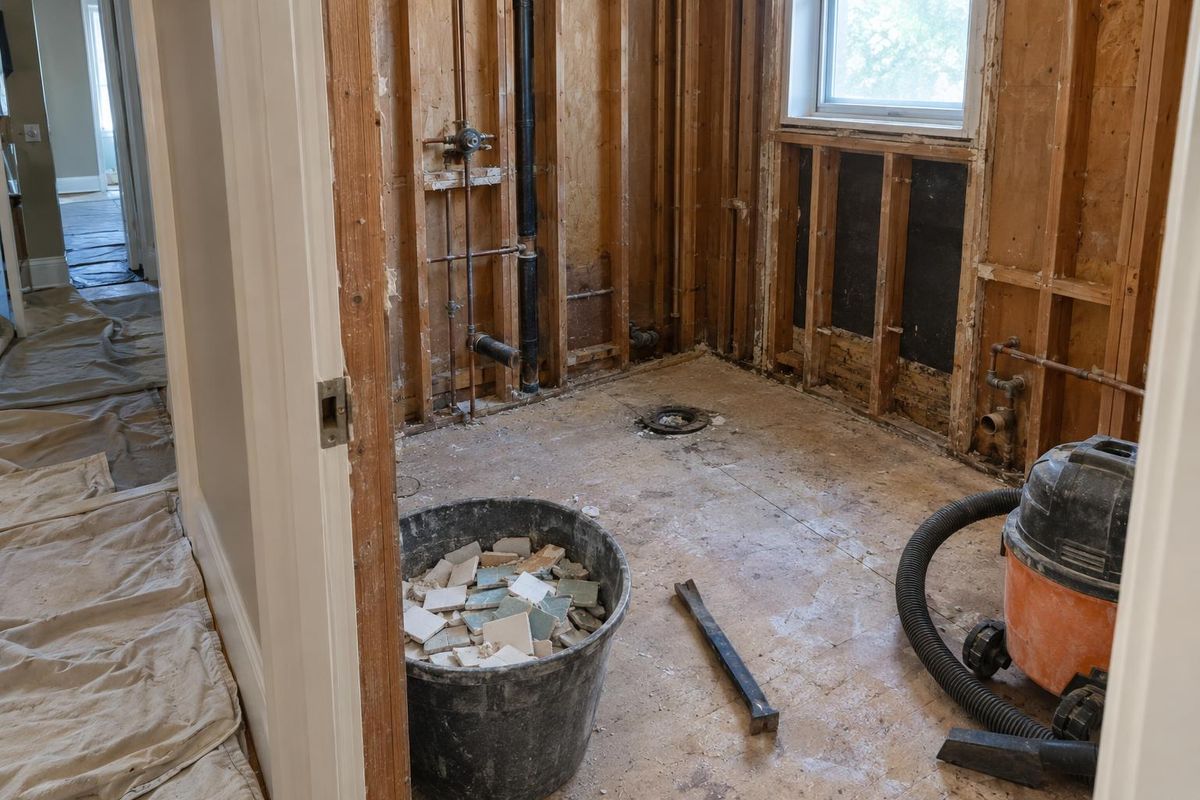
Tile and grout shed water but let some through. Behind them, a waterproofing membrane stops moisture from reaching the framing. In showers, the membrane runs across the floor and up the walls, with seams sealed.
Cement backer board is used in wet areas rather than ordinary drywall.
Slope and drainage
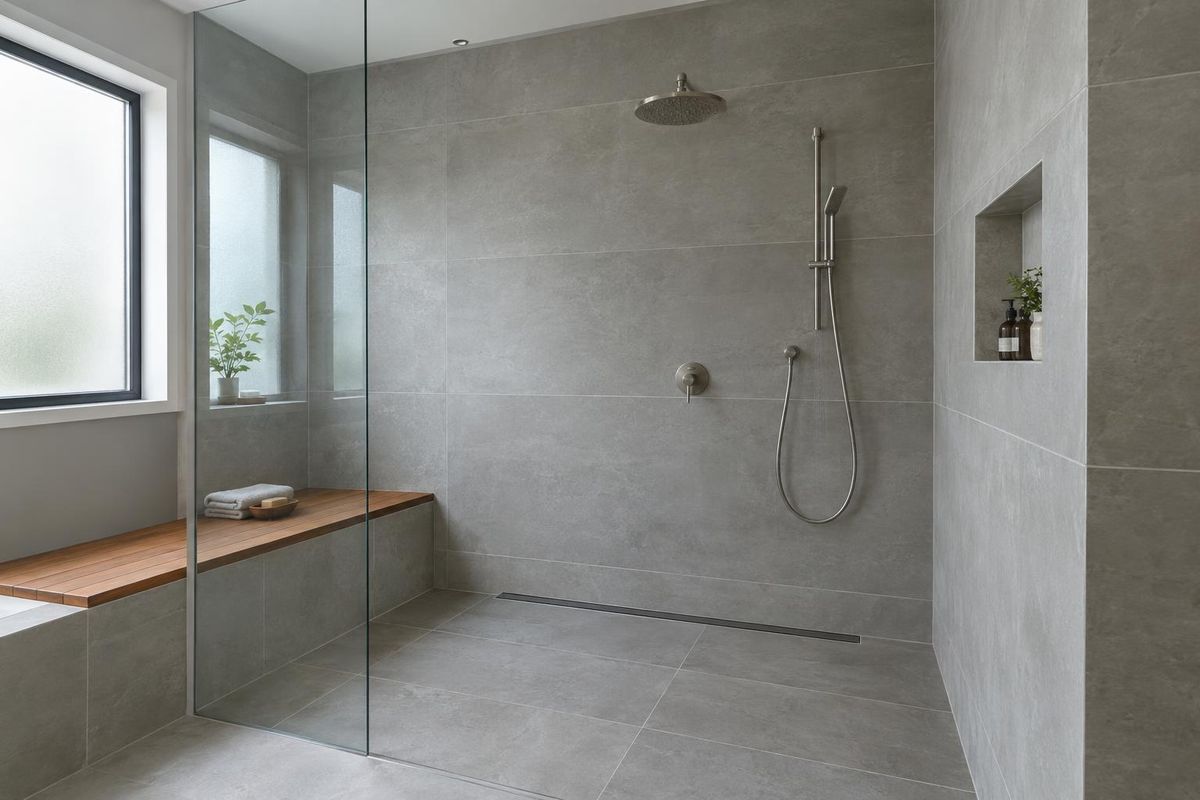
The shower floor must slope toward the drain, usually a quarter inch per foot, so water does not pool. A pre-slope under the membrane and a final slope above it protect both layers.
Linear drains need a single-direction slope.
Flood testing
Before tile goes on, the drain is plugged and the pan is filled with water for many hours. If the level holds, the base is sound. This simple test prevents most shower leaks.
Ask your installer whether they do it.
Ventilation
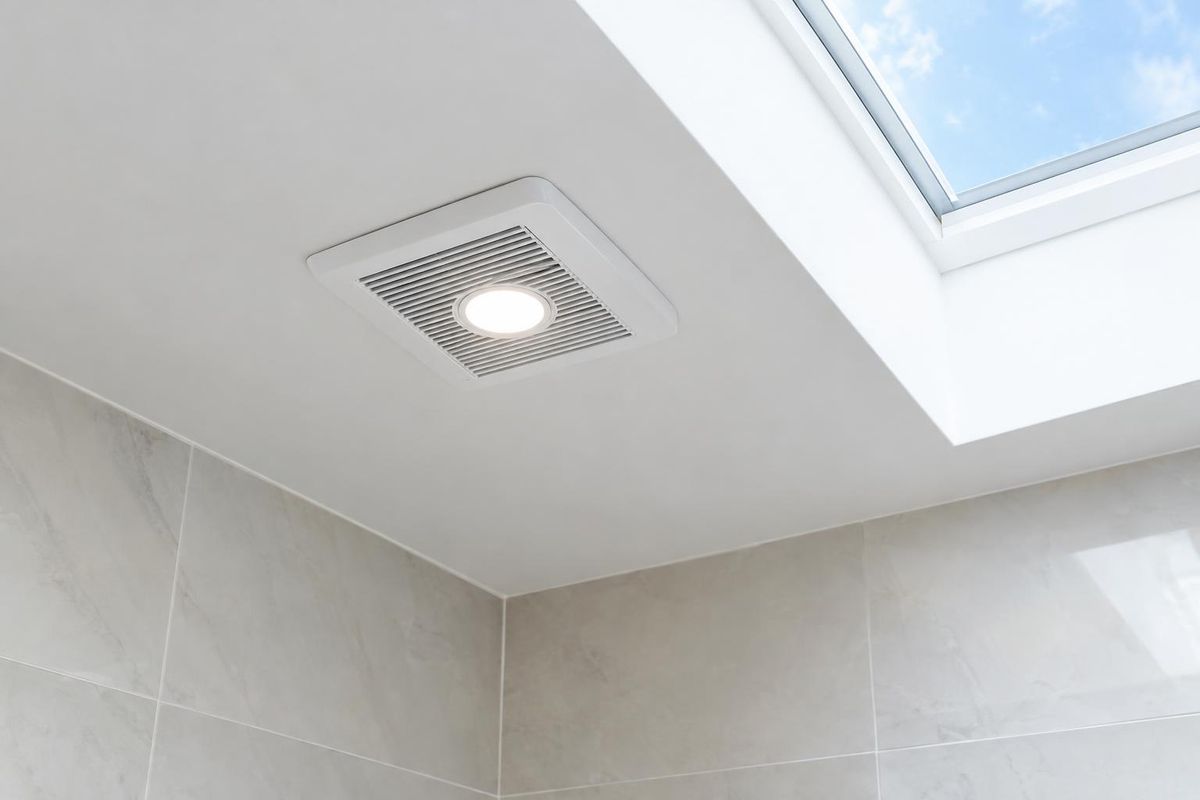
A fan sized to the room and ducted outside removes steam and protects paint, grout and framing. Humidity sensors or a timer run it long enough. Windows help but are not enough on their own.
Never duct a bath fan into an attic.
Quick answers
How long should a bathroom fan run?
About twenty minutes after a shower, which a timer or humidity sensor can handle for you.
Is a shower membrane really necessary?
Yes. It is the layer that keeps water from reaching the framing and subfloor.