Key takeaways
- Porcelain is the most durable and low-maintenance choice.
- Small tiles grip better on shower floors.
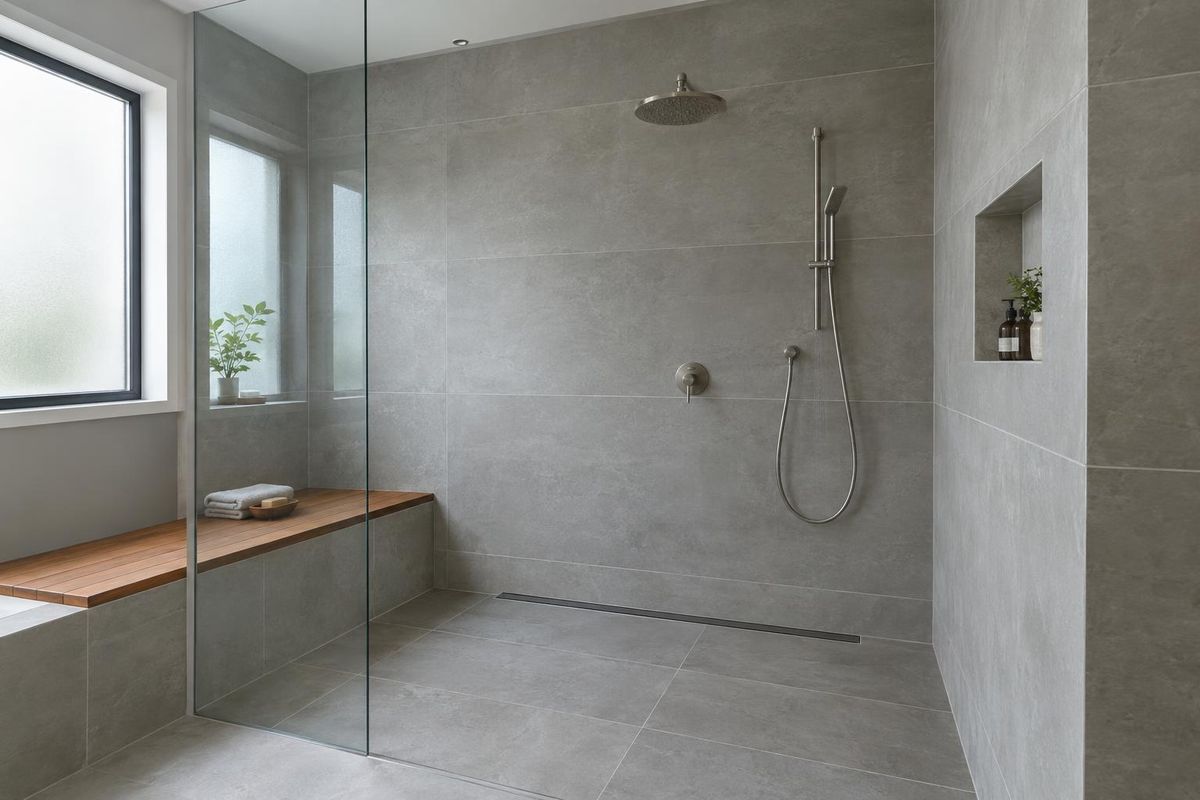
- Large tiles mean fewer grout lines but need a flat base.
- Epoxy grout resists stains the best.
Porcelain, ceramic and stone
Porcelain is dense, strong and almost waterproof, so it works on floors, walls and showers. Ceramic is easier to cut and is great for walls. Natural stone is beautiful but needs sealing and gentler cleaners.
If you love the look of marble but not the upkeep, marble-look porcelain is a strong choice.
Size and pattern
Large tiles make small rooms feel bigger and reduce grout lines. Subway tile is classic, hex and mosaic tiles add pattern and grip. Pattern layouts such as herringbone ask for more cutting and care.
Choose a layout that avoids tiny slivers at corners and niches.
Finish and slip resistance
Glossy tile on walls reflects light. On floors, choose a textured or matte finish with a good slip-resistance rating. In showers, small tiles and more grout lines add traction.
Check the tile is rated for wet floors.
Grout and sealing
Cement grout is common and needs sealing. Epoxy grout is more stain-resistant and does not need sealing but is harder to install. Pick a grout color close to the tile for a calm look or a contrast for a graphic one.
Flexible caulk, not grout, belongs in corners and where surfaces meet.
Quick answers
What tile is best for a shower floor?
Small mosaic tiles work well because they follow the slope and give more grip.
How do I keep grout looking clean?
Seal cement grout, wipe the shower after use and use mild cleaners. Epoxy grout is the lowest-maintenance option.